
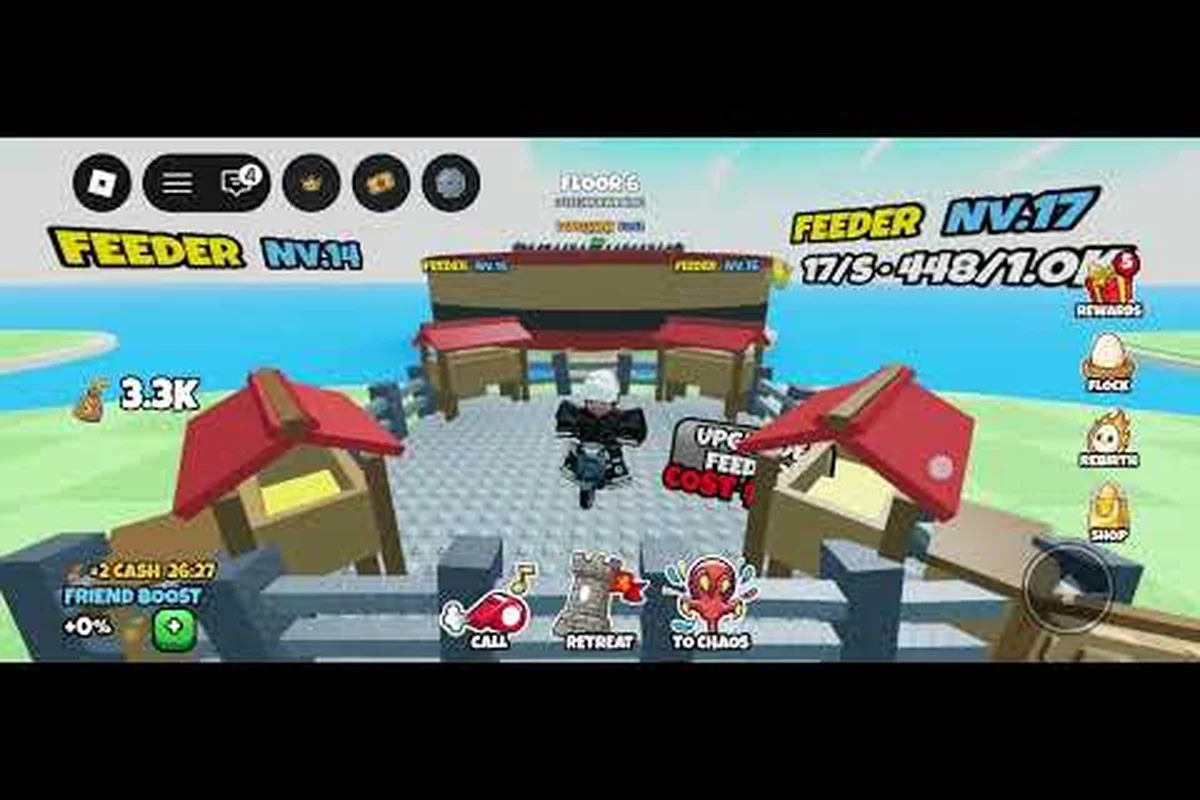
Fusion is the single most misunderstood mechanic in Grow a Chicken Fighter, yet it's also the fastest path to a monster that can clear Tower floors and farm the Pit for serious money. When you fuse two chickens, you're not just combining stats — you're unlocking mutated traits that can multiply egg value, boost combat power, and even change what your chicken lays. Understanding how fusion works before you burn your best birds is the difference between a smooth mid-game and a frustrating restart.
The core loop is simple: hatch eggs, level chickens, then fuse two maxed birds to create something stronger. But the details matter. Which chickens should you fuse? When should you fuse versus rebirth? And how do you set up a fusion farm that keeps producing mutated chickens without stalling your progress? This guide breaks down the entire system — from the fusion menu to mutation stacking — so you can make informed decisions with every pair you combine.
What Does Fusion Do in Grow a Chicken Fighter?
Fusion takes two chickens and combines them into a single mutated chicken with boosted stats and a chance at special traits. According to the official Grow a Chicken Fighter Roblox page, the game explicitly promotes fusing "two chickens into a mutated monster" as a core progression path alongside the Pit, the Tower, and Rebirth. This isn't a side feature — it's one of the five pillars of the entire game.
When you open the fusion menu, you'll see two slots. Select a chicken for each slot, confirm, and the game consumes both birds to produce one new chicken with a fusion level that starts at 1. The resulting chicken inherits a blend of both parents' base stats, but the real value comes from the mutation system.
Here's what actually changes after a successful fusion: your chicken fighter’s base stats—attack, defense, and speed—are permanently boosted by a percentage that scales with the rarity of the sacrificed bird. For example, fusing two Epic-tier fighters can push a single stat past the 500-point threshold, which is the key breakpoint for unlocking advanced mutations in later stages. This is why the fusion farm strategy is so critical: instead of grinding for one perfect bird, you breed multiple mid-tier fighters to use as fusion fodder, effectively turning a 10% stat gain per fuse into a compounding 30-40% total boost across three fusions. The trade-off is that the fused fighter loses its original mutation slots, so you’ll need to re-roll those traits afterward, making fusion a deliberate gamble rather than a straight upgrade.
-
Base stats increase — the mutated chicken starts with higher HP, damage, and egg production than either parent
-
Mutation chance triggers — each fusion has a chance to roll a mutation that adds a unique effect
-
Egg type can shift — some mutations change what your chicken lays, like the Thunder Egg mentioned in community tutorials
-
Visual appearance changes — fused chickens look different, with glowing accents and altered silhouettes
The key thing to understand is that fusion is permanent. Once you fuse two chickens, they're gone. You can't unfuse them, and you can't get the originals back. This is why planning matters — you don't want to fuse your best farmer with a random hatchling just to see what happens.
Navigating the Fusion Menu
Before you can fuse anything, you need to unlock the fusion menu, which appears after your chicken reaches Level 5 and you’ve hatched at least two distinct fighters. The game doesn’t gate this behind a high level, but you do need to meet a few basic requirements: a full fusion slot (two birds at or above that threshold) and 500 gold per attempt. This low barrier means you can start experimenting with mutations early, but it also means you’ll burn through resources fast—so plan your first fuse around a specific trait you want to copy, like a rare feather color, rather than fusing blindly.
-
Two chickens at or above level 10 — lower-level birds can't fuse
-
A fusion fee — paid in in-game currency, scaling with the chickens' levels
-
Access to the fusion area — located in the main hub, marked with a distinct icon
The fee is worth noting because it scales. Fusing two level 10 chickens costs a modest amount, but fusing two level 50 birds will drain a significant chunk of your savings. Community reports on the official Discord server suggest that players often wait until they have a solid income stream before attempting high-level fusions, since the fee can wipe out an hour of Pit farming.
The Fuse Flow: From Two Birds to One Hybrid
The actual fusion process takes less than a minute once you have the right chickens ready. Here's the exact sequence, based on the official game description and community tutorials like Peach Soda Roblox's fusion guide.
-
Hatch eggs until you have two chickens you want to fuse — ideally both at max level for the best stat inheritance
-
Open the fusion menu from the hub area
-
Select your first chicken in the left slot
-
Select your second chicken in the right slot
-
Review the predicted result — the game shows you the base stats the mutated chicken will start with
-
Confirm the fusion and pay the fee
-
Watch the animation — the two chickens merge into one with a flash of light
-
Check your new chicken's traits — open its stats page to see if you rolled a mutation
That's the whole process, but the simplicity of these steps hides the complexity of the decisions behind them. Choosing which two chickens to fuse isn't random—it's a strategic gamble. You need to weigh base stats like attack power versus speed, and consider whether you're chasing a specific mutation for your fighter's role. A "good" mutation, such as a damage boost or elemental resistance, can define your build, while a "bad" one, like reduced stamina, might cripple it. For a fusion farm, this means tracking lineage carefully to avoid wasted resources on a dud hatch.
Choosing the Right Chickens to Fuse
The biggest mistake new players make is fusing their two highest-level chickens without thinking about what they're trying to achieve. If you're building a fusion farm, you want chickens that boost egg production. If you're pushing Tower floors, you want combat stats. If you're farming the Pit, you want a balance of both.
| Fusion Goal | Primary Stat | Secondary Stat | Best Chicken Type |
|---|---|---|---|
| Egg Production | Egg Value | Lay Rate | Farmer-type chickens |
| Tower Climbing | Damage | HP | Fighter-type chickens |
| Pit Farming | Damage | Egg Value | Balanced-type chickens |
| Money Making | Egg Value | Lay Rate | Any high-tier chicken |
The table above reflects community testing reported by players on the Discord. The general consensus is that you should match your fusion goal to your current progression stage. Early game, focus on egg production to build income. Mid game, pivot to combat stats for Tower climbing. Late game, you'll want specialized chickens for each activity.
Mutation Mechanics and How They Stack
Mutations are the real reason to fuse. A mutated chicken isn't just stronger — it has a unique trait that can dramatically change how you play. Based on the official game page and community reports, mutations can affect everything from egg type to combat abilities.
The most famous example is the Thunder Egg. Peach Soda Roblox's tutorial demonstrates how fusing specific chickens can produce a chicken that lays Thunder Eggs 100% of the time. These eggs sell for significantly more than standard eggs, making them a cornerstone of late-game money farming.
Here's what we know about mutation mechanics based on community testing: each fusion attempt rolls mutations independently per stat, meaning a fighter can inherit a mix of Attack and Defense buffs rather than a single uniform boost. The key finding is that mutations stack multiplicatively, not additively—so two +10% Attack mutations yield roughly +21% total, not +20%. This explains why endgame players prioritize fusion farming on base fighters with high IVs, since the percentage gains scale off the pre-fusion stat line, making a 100-ATK chicken vastly outperform a 70-ATK one after three successful fuses.
-
Mutation chance is not guaranteed — some fusions produce no mutation at all
-
Higher-level parents seem to increase mutation odds — though this isn't officially confirmed
-
Certain chicken combinations appear to have higher mutation rates — players report specific pairings working better than others
-
Mutations can stack — a chicken can have multiple mutations, though each additional mutation seems harder to roll
The stacking system is where things get interesting. A chicken with two mutations — say, increased egg value and faster lay rate — is worth far more than two separate chickens with one mutation each. This is why fusion farms exist: players breed mutated chickens, then fuse those mutated chickens together to try for even better combinations.
Understanding Mutation Tier Levels
Not all mutations are created equal. Based on community reports and the game's progression curve, mutations appear to fall into three distinct tiers: common stat boosts (like +2 Power), rare utility shifts (such as faster attack speed), and legendary fusion-altering effects that change a fighter's core move set. The tier you land on directly impacts your fusion farm efficiency—chasing top-tier mutations often requires re-rolling low-level chickens repeatedly, since a single legendary mutation can double a fused fighter's arena viability compared to a common one.
| Mutation Tier | Example Effect | Rarity | Best Use |
|---|---|---|---|
| Common | +10% egg value | Common | Early-game income boost |
| Rare | +25% egg value, +5% lay rate | Uncommon | Mid-game farming |
| Epic | Thunder Egg production | Rare | Late-game money making |
| Legendary | Multiple stat boosts + special ability | Very Rare | End-game Tower climbing |
The exact percentages aren't officially published, so treat these as community estimates. What matters is the pattern: rarer mutations provide bigger bonuses, and the best mutations combine multiple effects. A single legendary mutation can outperform three common ones because its multiplier applies to base stats like attack speed and damage simultaneously, whereas commons only nudge one trait. For example, fusing two maxed commons might add a flat +5% crit chance, but a legendary "Fury" roll can stack +15% damage with a 10% lifesteal, shifting your fighter's role from filler to carry. This is why most grow a chicken fighter fusion guides prioritize saving rare birds for high-tier fuses rather than spamming low-value merges.
Building a Fusion Farm for Consistent Mutations
A fusion farm is a systematic approach to producing mutated chickens. Instead of fusing randomly and hoping for the best, you create a pipeline that consistently generates strong chickens. This is the strategy that separates serious players from casual ones.
The basic fusion farm setup works like this: you’ll need at least two adult chickens—ideally with complementary stats like high attack or HP—placed in adjacent coops, then feed them a special Fusion Berry to trigger the merge. This process consumes both birds but yields a single Fighter with a random mutation, so running repeated cycles is key. For example, a farm with four coops and a steady berry supply can produce roughly 10 fusion attempts per in-game day, giving you a 30% chance per try of landing a rare stat boost.
-
Maintain a breeding stock — keep 4-6 high-level chickens that you never fuse
-
Hatch eggs continuously — your breeding stock lays eggs that you hatch for fusion fodder
-
Level up fusion fodder — take the best hatchlings and level them to the fusion minimum
-
Fuse in pairs — combine two leveled chickens, hoping for a mutation
-
Keep the best results — mutated chickens either join your breeding stock or become fusion fodder for higher-tier fusions
-
Sell the rest — non-mutated fusion results can be sold or used for Pit fighting
This loop keeps your fusion pipeline running without ever depleting your core team. The key insight is that you don't need to fuse your best chickens — you need a steady supply of decent chickens to use as fusion material.
Fusion Farm vs. Rebirth Strategy
One of the most common questions from new players is whether to focus on fusion or rebirth. The answer depends on where you are in the game. Our rebirth guide covers the rebirth system in detail, but here's the short version: rebirth resets your progress for a permanent multiplier, while fusion creates stronger individual chickens.
| Strategy | Best For | Time Investment | Reward |
|---|---|---|---|
| Fusion Farm | Building strong individual chickens | Medium | Mutated chickens with unique traits |
| Rebirth Loop | Increasing global income multiplier | High | Permanent progression boost |
| Hybrid | Balanced progression | Very High | Both mutated chickens and rebirth bonuses |
Most serious players end up doing both. The hybrid approach uses fusion to create strong chickens that farm efficiently, then rebirths to multiply the income those chickens generate. If you're trying to climb the Tower, check out our Tower rewards list to see what you're working toward.
Fusion Level and Long-Term Progression
Every fused chicken carries a fusion level that tracks how many times it has been used as a fusion ingredient, and this number is far more than a cosmetic badge. Each fusion level permanently raises the chicken's base stat ceiling, meaning a level-3 fused bird can out-scale a level-1 rival even when both are trained to the same absolute level. More critically, the fusion level directly multiplies the chicken's value as material for future fusions — a level-2 chicken passed into a new fusion will grant a significantly larger stat boost to the resulting offspring than a fresh, never-fused bird. This creates a compounding loop: fusing high-level chickens into a single "super breeder" accelerates the stat ceiling of every subsequent fusion, making the fusion level the single most important metric when planning a long-term fusion farm.
Here's how fusion level works based on community testing: each fusion consumes two identical fighters of the same star rating and rarity, with the resulting fighter inheriting the higher of the two base stats while gaining a single fusion point. These points are cumulative—fusing a 1-star fighter twice yields a 2-star fighter, and so on—but the catch is that fusion level caps at the fighter's natural rarity tier. For example, a common fighter can only reach 3 stars via fusion, forcing players to either farm duplicate mutations or breed for higher-tier base fighters to push past that ceiling. This makes fusion farm strategies critical for long-term progression, since every wasted fusion on a capped fighter permanently locks those resources.
-
Fusion level 1 — a chicken that's been fused once
-
Fusion level 2 — a chicken that's been fused twice (meaning it was the product of a fusion, then fused again)
-
Higher levels — continue stacking, with each fusion potentially adding more mutations
The key insight is that fusion level compounds. A level 2 fused chicken has better base stats than a level 1, and it has more chances to have rolled mutations. This creates a natural progression where your best chickens get better over time.
When to Fuse vs. When to Keep
Not every chicken should be fused. Some chickens are better kept as-is, especially if they have a rare mutation that you don't want to risk losing. The fusion process consumes both parents, so if you fuse a chicken with a legendary mutation, that mutation is gone unless the new chicken inherits it.
| Situation | Recommendation | Reasoning |
|---|---|---|
| Two common chickens | Fuse them | Low risk, chance at a better result |
| One rare, one common | Keep the rare, fuse the common | Don't risk losing the rare mutation |
| Two rare chickens | Fuse them | High risk, high reward — could produce an epic |
| Any legendary chicken | Never fuse it | Legendary mutations are too valuable to risk |
This conservative approach means you'll fuse fewer chickens, but the ones you do fuse will have better odds of producing something worthwhile. For a complete breakdown of which chickens to fuse and which combinations work best, see our fusion combinations guide.
Advanced Fusion Tips from the Community
The Grow a Chicken Fighter community has spent thousands of hours testing fusion mechanics, and several patterns have emerged from their experiments. These aren't officially confirmed by the developer, but they're consistent enough across multiple reports to be worth trying.
-
Fuse chickens of the same type — community reports suggest same-type fusions have higher mutation rates than cross-type fusions
-
Max level before fusing — chickens fused at max level seem to produce stronger offspring
-
Bank eggs before fusing — since fusion consumes chickens, make sure your egg production doesn't drop to zero while you rebuild
-
Time your fusions around events — some players report better mutation rates during in-game events, though this may be confirmation bias
One strategy that keeps coming up in community discussions is the bank eggs for fusion approach. Before you fuse your best farmers, stockpile eggs so you have a safety net. This way, even if the fusion produces a dud, you're not left with zero income. Our fusion guide covers this strategy in more detail.
Fusion Blunders That Cost Rare Birds
Even experienced players make mistakes with fusion, and the fallout is almost always the same: a wasted grow a chicken fighter fusion farm that produces a weaker bird than the sum of its parts. The most common error, based on community reports, is fusing two fighters with identical mutation pools but conflicting stat priorities—say, a speed-lean and a power-lean bird—which cancels out the desired trait instead of stacking it. Another frequent slip is fusing at level 1, ignoring that the base stats of both parents carry over proportionally; fusing early means you inherit a low ceiling, forcing a rebuild later. Players also routinely overlook the 24-hour cooldown after a failed fusion, which stalls their grow a chicken fighter fusion farm exactly when they need momentum. Understanding these pitfalls matters because each mistake not only costs resources but also locks you out of the mutation roll you were chasing, making the grow a chicken fighter what does fusion do question painfully clear: it’s a high-risk, high-reward gamble, not a guaranteed upgrade.
-
Fusing too early — fusing level 10 chickens wastes the potential of higher-level fusions
-
Fusing your best chicken — always keep at least one strong chicken for farming
-
Ignoring the fee — high-level fusions are expensive; make sure you can afford it
-
Not checking the predicted result — the game shows you what you'll get; review it before confirming
-
Fusing without a plan — know what you want before you fuse, don't just combine random chickens
Avoiding these mistakes will save you hours of grinding, especially when you're deep into a grow a chicken fighter fusion farm session. The most important rule is to always have a backup plan — never fuse your last good chicken without knowing how you'll rebuild. For example, if you're fusing a rare mutation like a double-attack trait, keep a spare with a neutral stat spread in your roster, even if it's not ideal. Why? Because a failed fusion doesn't just waste the chicken—it can wipe out your only source of that trait, forcing you to re-farm mutations from scratch. That single loss can set you back dozens of battles, so a reserve gives you a safe fallback to retry without restarting your entire grow a chicken fighter fusion explained strategy.
Frequently Asked Questions
What does fusion do in Grow a Chicken Fighter?
Fusion combines two chickens into one mutated chicken with boosted stats and a chance at unique traits. The resulting chicken can lay special eggs like Thunder Eggs, deal more damage, or produce eggs faster. Fusion is permanent, so both parent chickens are consumed in the process.
How do I unlock fusion in Grow a Chicken Fighter?
Fusion is available from the hub area once you have two chickens at level 10 or higher. Open the fusion menu, select two eligible chickens, pay the fusion fee, and confirm. The fee scales with your chickens' levels, so higher-level fusions cost more.
Can I fuse chickens more than once?
Yes, fused chickens can be fused again. Each fusion increases the chicken's fusion level and provides another chance to roll mutations. However, this is risky because you lose the current chicken if the fusion doesn't produce a better result. Fuse again only when the new roll is likely to beat your current bird.
What is the best fusion strategy for beginners?
Start with a fusion farm: keep 4-6 strong chickens for breeding, hatch eggs continuously, level up the best hatchlings, and fuse them in pairs. This gives you a steady supply of fusion material without risking your core team. Focus on egg production mutations first to build income.
Do mutations stack in Grow a Chicken Fighter?
Yes, mutations stack on a single chicken, but each extra one gets harder to roll. A maxed-out bird with three or four mutations is your ticket for fusion—combining stacked chickens boosts their base stats further, making Tower climbs far easier. Stacking is therefore the fastest route to a dominant endgame fighter.