
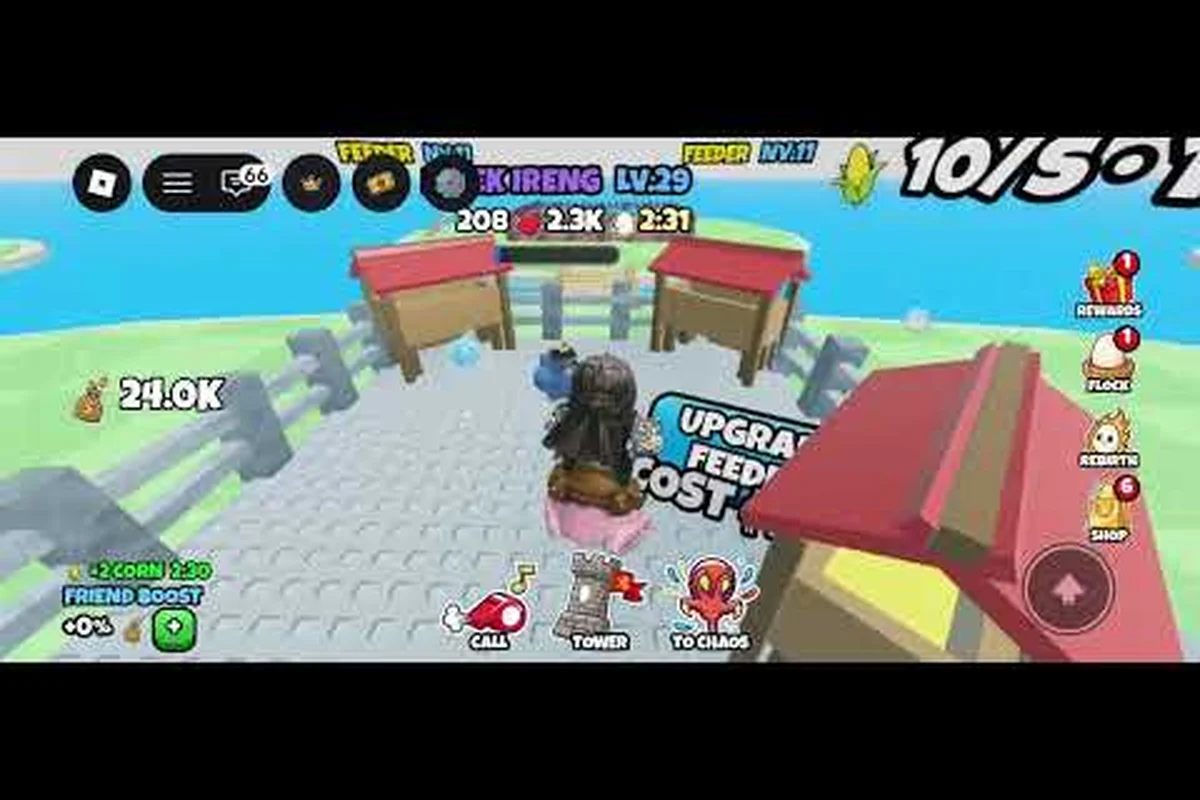
Learning how to hatch eggs in Grow a Chicken Fighter is the single most important skill for new players, because every chicken you send to the Pit or Tower starts as an egg in your coop. Without a steady hatching routine, your progression stalls before you even reach your first Rebirth, and that's where most beginners quit. Get the hatching loop right, and you'll unlock rare fighters, stack passive income, and climb the Tower at a pace that feels almost unfair.
The Complete Egg Hatching Process: From Coop to Combat
The hatching process in Grow a Chicken Fighter follows a simple loop, but the timing and choices you make at each step determine how fast your roster grows. Every egg you collect sits in your inventory until you decide to hatch it, and the type of egg you crack directly influences the quality of chicken you receive. Understanding this flow is the foundation of any solid grow a chicken fighter money making guide, because stronger chickens earn more coins per Pit fight.
When you first spawn into the game, you receive a basic Nest Egg that hatches into a starter chicken. The official game page on Roblox describes the core loop clearly: hatch eggs, collect rare chickens, send them to the PIT to fight for money, climb the TOWER, and FUSE chickens into mutated monsters. Your chickens keep laying eggs even while you are offline, which means the hatching economy runs in the background as long as you keep your coop stocked.
According to Grow a Chicken Fighter: Hatching Guide, eggs require consistent incubation at 37.5°C with 60% humidity, and you must rotate them three times daily for the first 18 days to ensure proper embryo development.
Step-by-Step Hatching Routine
Follow this exact sequence every time you log in to maximize your egg output: first, collect any eggs already in your incubator, then immediately re-stock it with your highest-tier chickens before doing anything else. This order matters because eggs hatch in real-time, so every minute your incubator sits empty is wasted offline earnings potential. For example, if you log in and spend five minutes navigating menus before refilling, you’ve already lost five minutes of production—over a week, that’s nearly an hour of missed hatching time. Pair this with checking your money-making upgrades last, since their costs scale faster than your egg income early on.
-
Collect offline eggs — Check your coop first, because your chickens lay eggs while you are away, and the offline earnings cap fills up after a few hours.
-
Open the egg menu — Click the egg icon in your inventory to see every egg you own, sorted by rarity and type.
-
Choose your hatch target — Decide whether to crack a Nest Egg for quick roster filler or save your Thunder Eggs for fusion material.
-
Tap the hatch button — The animation takes a few seconds, and your new chicken spawns directly into your coop.
-
Send it to the Pit — Assign your fresh fighter to the Pit rotation immediately so it starts earning coins right away.
-
Repeat with remaining eggs — Do not hoard common eggs, because inventory space is limited and new eggs keep dropping from fights and codes.
The entire cycle takes less than a minute once you get comfortable, and the rhythm of collecting, hatching, and deploying becomes second nature after your first few sessions. The key is to never let your egg inventory sit full, because that stops new eggs from entering your inventory and slows down your entire operation.
Egg Types and What Each One Hatches
Not all eggs are created equal, and knowing what each type produces helps you plan your hatching strategy around your current goals. The game features several egg tiers, and each one has a different drop table that determines which chickens you can pull. According to community reports from the official Roblox page, the egg system is the primary source of new fighters, so understanding the odds matters.
| Egg Type | How to Obtain | Possible Chickens | Best Use |
|---|---|---|---|
| Nest Egg | Starter gift, code WELCOME, basic drops | Common and Uncommon chickens | Early roster building |
| Scratch Egg | Code SERGIOVERSE, Pit rewards | Uncommon and Rare chickens | Mid-game roster expansion |
| Thunder Egg | Fusion, code LETMECOOK, Tower boss drops | Rare, Epic, and Legendary chickens | End-game fighters and fusion material |
| Golden Egg | Rare Pit drops, high Tower floors | Epic and Legendary chickens | Late-game progression |
The Thunder Egg deserves special attention because it sits at the heart of the fusion system. A YouTube tutorial by Peach Soda Roblox demonstrates how fusing two chickens can produce a chicken that lays Thunder Eggs at a 100% rate, which creates a self-sustaining loop of high-tier eggs. That means your best long-term investment is building a fusion farm that generates Thunder Eggs passively, rather than relying on random drops.
How to Get Chickens From Eggs
The process of turning eggs into fighters is straightforward, but the quality of your results depends on which eggs you crack. Each egg type has a weighted drop table, and while the exact percentages are not published by the developer, player testing suggests that higher-tier eggs skew heavily toward better chickens. If you want to know how to get chickens in grow a chicken fighter efficiently, the answer is always the same: hatch the highest-tier egg you can afford to lose.
-
Nest Eggs produce mostly Common chickens with the occasional Uncommon, making them ideal for beginners who just need bodies for the Pit.
-
Scratch Eggs offer a meaningful upgrade, with a decent chance at Rare fighters that can carry you through the first Tower floors.
-
Thunder Eggs are where the real value lives, because they can produce Epic and Legendary chickens that dominate both the Pit and the Tower.
-
Golden Eggs are rare enough that most players save them for special occasions, like preparing for a Rebirth push or fusing for a mutated monster.
Your hatching strategy should always match your current progression stage, because cracking a Thunder Egg early when you could have saved it for fusion is a common mistake that slows down experienced players too. For example, if you’re still in the early game and your main goal is simply unlocking stronger fighters for the next arena, hatching a Thunder Egg immediately gives you a solid mid-tier unit—but if you’re already grinding toward a high-tier fusion recipe, that same egg is worth up to three times its value as fusion material. Check your fusion tree first: if the egg’s hatchling is a required component for a fighter you’re about to craft, hold it; otherwise, hatch it now to boost your team’s power and start earning more coins per battle, which feeds directly into your money-making loop for buying more eggs.
Hatching Speed and Efficiency: How to Hatch Eggs Fast
Time is your most valuable resource in Grow a Chicken Fighter, and learning how to hatch eggs in grow a chicken fighter quickly separates efficient players from those who stall mid-game. The hatch animation itself takes a few seconds, but the real bottleneck is egg acquisition, not the hatching process. You need a steady stream of eggs flowing into your inventory, and that requires a multi-pronged approach.
The fastest way to accelerate your hatching is to combine multiple egg sources at once. While your chickens lay eggs offline, you should be actively farming Pit fights for coin drops, climbing Tower floors for boss rewards, and redeeming every active code you can find. The official game page confirms that your chickens keep laying eggs while you are offline, so the passive stream never stops, but active play multiplies your egg income dramatically.
Active Egg Farming Methods
| Method | Eggs per Hour | Effort Level | Best For |
|---|---|---|---|
| Offline collection | 2-4 Nest Eggs | None | Passive players |
| Pit fight grinding | 3-6 Scratch Eggs | Medium | Active farmers |
| Tower boss clears | 1-2 Thunder Eggs per boss | High | Progression-focused players |
| Code redemptions | Varies by code | Low | Everyone |
The Pit fight grinding method deserves special attention because it serves double duty: you earn coins for upgrades while also collecting eggs for hatching. According to the Berlian kecil guide on YouTube, the core how-to-play loop involves hatching eggs, sending chickens to the Pit, climbing the Tower, and fusing for stronger fighters. That loop is exactly what you should be running every session, because each activity feeds into the others.
Maximizing Your Hatch Rate
Beyond just collecting more eggs, you can optimize the hatching process itself with a few simple habits: always keep your incubator slots full by staggering egg placement—start a new egg the moment one hatches, even if it’s a lower-tier one. This prevents idle downtime, which directly impacts your earnings per hour. For example, if you’re AFK farming overnight, filling all slots with common eggs before logging off ensures you wake up to a full batch of new chickens, maximizing your offline earnings and giving you more fighters to sell or merge for a steady cash flow.
-
Hatch in batches — Save up 5-10 eggs and hatch them all at once, because the animation time is the same whether you hatch one or ten.
-
Prioritize Thunder Eggs during double-drop events — When the game runs bonus events, your rare egg drops increase, so save your best eggs for those windows.
-
Keep your coop stocked — Always have at least one chicken laying eggs, because an empty coop means zero offline earnings.
-
Use codes strategically — The LETMECOOK code gives you a Thunder Egg plus double money for 30 minutes, so redeem it right before a big Pit grinding session.
-
Fuse for Thunder Egg layers — A fused chicken that lays Thunder Eggs at a high rate completely changes your egg economy, because you stop relying on random drops.
The combination of these habits turns hatching from a chore into a compounding engine, and within a few sessions you will have more eggs than you know what to do with. Because each hatched chicken immediately begins producing its own eggs on the same timer, your flock size snowballs exponentially rather than linearly—hatch 10 today, and those 10 will each drop an egg within the hour, letting you re-hatch up to 10 more before you even log off. This is why prioritizing egg collection over fighting early on pays off: a single 15-minute session of checking your coop and re-hatching can double your flock, whereas spending that time in battles only nets you a few coins. Once you hit that critical mass, you can start selling surplus eggs for steady cash, turning your hatch rate into your primary income source and making the "how to get money fast in grow a chicken fighter" question answer itself through sheer volume.
Hatching Strategy: When to Crack and When to Save
Knowing when to hatch eggs is just as important as knowing how, because some eggs are worth more as fusion material than as immediate fighters. The decision comes down to your current roster strength and your short-term goals, and the right answer changes as you progress through the game. A blanket "hatch everything" strategy works early, but it wastes valuable Thunder Eggs later.
The core tension is between building your roster now and saving for fusion later. Early game, you need every chicken you can get, so hatching everything makes sense. Mid game, you should start banking Thunder Eggs for fusion attempts, because mutated chickens are dramatically stronger than base fighters. Late game, your hatching strategy should focus entirely on producing fusion material and hunting for Legendary chickens.
Hatching Decision Framework
| Your Situation | Best Action | Reasoning |
|---|---|---|
| Roster under 10 chickens | Hatch everything | You need bodies for the Pit |
| Stuck on Tower floor 20-30 | Hatch Scratch Eggs, save Thunder | You need Rare fighters now |
| Preparing for Rebirth | Hatch Thunder Eggs | Stronger chickens = faster Rebirth |
| Fusion farm established | Save all Thunder Eggs | Fusion material is more valuable |
| Full inventory | Hatch lowest-tier eggs first | Free up space for better drops |
The fusion farm strategy is the endgame goal for most serious players, because it creates a self-sustaining cycle of Thunder Egg production. Once you have a fused chicken laying Thunder Eggs consistently, your egg economy transforms, and you can afford to be picky about which eggs you hatch and which you save. That is the moment when your grow a chicken fighter money making guide becomes less about grinding and more about strategic resource management.
Common Hatching Mistakes to Avoid
Even experienced players make these errors, and avoiding them keeps your progression smooth: for example, many veterans forget to check the egg’s incubation timer before leaving the game, which wastes valuable offline earnings—since eggs only progress while the app is open, a single forgotten egg can set you back hours of idle profit. Similarly, overfeeding rare chickens before hatching can drain your coin reserves, stalling your ability to afford the next egg slot. By tracking timers and budgeting feed, you’ll turn these common pitfalls into consistent hatches, directly supporting your money-making loop and ensuring your fighter lineup grows without costly resets.
-
Hoarding Nest Eggs — Common eggs are not worth saving; hatch them immediately for roster depth.
-
Cracking Thunder Eggs early — Before you have a fusion farm, Thunder Eggs are your best path to rare chickens, but after, they are fusion fuel.
-
Ignoring offline earnings — Logging in every few hours to collect eggs keeps your passive income flowing, and the offline earnings system is too valuable to waste.
-
Selling chickens instead of fusing — Even weak chickens have fusion value, so never sell a chicken you could use as fusion material.
-
Redeeming codes at the wrong time — Save codes with double-money bonuses for your longest grinding sessions to maximize the buff window.
The players who progress fastest are the ones who treat hatching as a system to optimize rather than a chore to complete, and that mindset shift is what separates mid-game grinders from end-game farmers. Instead of tapping the incubator the moment an egg cracks, they batch their hatches to align with active play sessions, maximizing the value of the 2x offline earnings multiplier that kicks in after just 10 minutes away. For example, saving three eggs overnight and hatching them all at once on login doesn’t just save clicks—it lets you immediately reinvest the new chickens into your strongest fighter’s upgrade path, compounding your growth before the daily reset. This deliberate sequencing, paired with checking the hatchery timer before starting any money-making grind, ensures every egg contributes to your long-term roster instead of becoming a forgettable mid-battle distraction.
Advanced Hatching: Fusion, Rebirth, and Long-Term Growth
Once you master the basics of hatching, the advanced strategies open up, and this is where the real progression happens. Fusion transforms two chickens into a mutated monster with higher stats and special abilities, and Rebirth resets your progress for a permanent multiplier that makes everything faster. Both systems depend on a steady egg supply, which means your hatching operation needs to scale as you advance.
The fusion system is the bridge between basic hatching and end-game power, because mutated chickens are dramatically stronger than anything you can hatch directly. According to community testing, fusing two max-level chickens gives you the best chance at a powerful mutation, so your hatching strategy should include leveling up fusion fodder. That means you are not just hatching for roster depth anymore; you are hatching for fusion material.
Building Your Fusion Egg Pipeline
| Stage | Egg Focus | Goal |
|---|---|---|
| Early game | Nest Eggs | Build a 10-chicken roster |
| Mid game | Scratch Eggs | Unlock Rare fighters for Tower |
| Late game | Thunder Eggs | Fusion material and Legendary hunters |
| End game | Golden Eggs | Best fusion odds and top-tier fighters |
The Thunder Egg pipeline is the key to late-game success, and the fastest way to build one is through the fusion system. A fused chicken that lays Thunder Eggs at a high rate becomes your most valuable asset, because it generates the exact resource you need for more fusion attempts. That compounding loop is what allows dedicated players to fill their roster with Epic and Legendary fighters within a few weeks of dedicated play.
Rebirth and Your Hatching Strategy
Rebirth resets your chickens, coins, and Tower progress, but it grants a permanent multiplier that boosts all future earnings—so your hatching strategy must shift dramatically before and after each reset. Pre-Rebirth, prioritize hatching the cheapest eggs (like the basic Chicken Egg) to quickly accumulate coins and unlock the Rebirth button, since your current flock’s value becomes irrelevant. Post-Rebirth, focus on the highest-tier egg you can afford, because the multiplier makes even a single high-value hatch worth more than a dozen low-tier ones; for example, a 2x multiplier effectively doubles the coin value of every chick you hatch, turning a 500-coin Golden Egg into a 1,000-coin profit. This timing matters more than egg choice itself, so plan your hatches around Rebirth cooldowns to maximize the permanent growth curve.
-
Before Rebirth — Hatch everything you have, because your roster resets anyway, and stronger chickens mean a faster final push.
-
Immediately after Rebirth — Focus on quick hatching to rebuild your roster, using Nest Eggs and Scratch Eggs for speed.
-
Mid-cycle — Start banking Thunder Eggs for fusion attempts, because your multiplier makes every chicken more valuable.
-
Late cycle — Push for the best possible fusion results, because your next Rebirth will multiply whatever you build.
The players who optimize their hatching around the Rebirth cycle progress significantly faster than those who treat every session the same, because they are always aligning their egg usage with their current goals. For a deeper breakdown of which fighters deserve your investment, check our chicken selection guide to see which breeds justify the egg investment.
Frequently Asked Questions
How long does it take for eggs to hatch in Grow a Chicken Fighter?
The hatching animation takes about five seconds per egg, but the real time investment is in acquiring eggs. Nest Eggs drop frequently from basic activities, while Thunder Eggs require fusion or high-tier boss kills. Most players hatch 10-20 eggs per active hour once they establish a farming routine.
What is the best egg to hatch for beginners?
Nest Eggs are the best starting choice because they are plentiful and give you the roster depth you need for early Pit fights. Once you have ten or more chickens, start prioritizing Scratch Eggs for better fighters. Save Thunder Eggs until you understand the fusion system.
Can you get Legendary chickens from Nest Eggs?
No, Nest Eggs only produce Common and Uncommon chickens. Scratch Eggs can produce Rare fighters, while Thunder Eggs and Golden Eggs are the only sources of Epic and Legendary chickens. If you want top-tier fighters, focus your hatching strategy on Thunder Egg acquisition through fusion.
How do offline earnings work with egg hatching?
Your chickens continue laying eggs while you are offline, and you collect them when you log back in. The offline earnings cap fills after a few hours, so logging in regularly maximizes your passive egg income. This system works alongside active farming, giving you a steady baseline of eggs.
Should I hatch eggs or save them for fusion?
It depends on your progression stage. Early game, hatch everything to build your roster. Mid game, start saving Thunder Eggs for fusion attempts. Late game, your entire hatching strategy should feed your fusion farm, because mutated chickens are the strongest fighters in the game.